
Why Wrists Hurt at Night with Carpal Tunnel
When you sleep, your wrists naturally curl into flexion — bending forward or backward. This position narrows the carpal tunnel, a tight passageway in your wrist through which the median nerve and nine flexor tendons travel. In a wrist that already has some degree of swelling or thickening inside the tunnel, this added compression can trigger numbness, tingling, and pain that wake you up.
Fluid also redistributes when you lie down, which can increase swelling in the wrist and further compress the nerve. That's why many patients notice their worst symptoms between 2:00 and 5:00 AM, and why shaking the hand out temporarily relieves the discomfort.
What a Brace Should Do (Neutral Wrist Position)
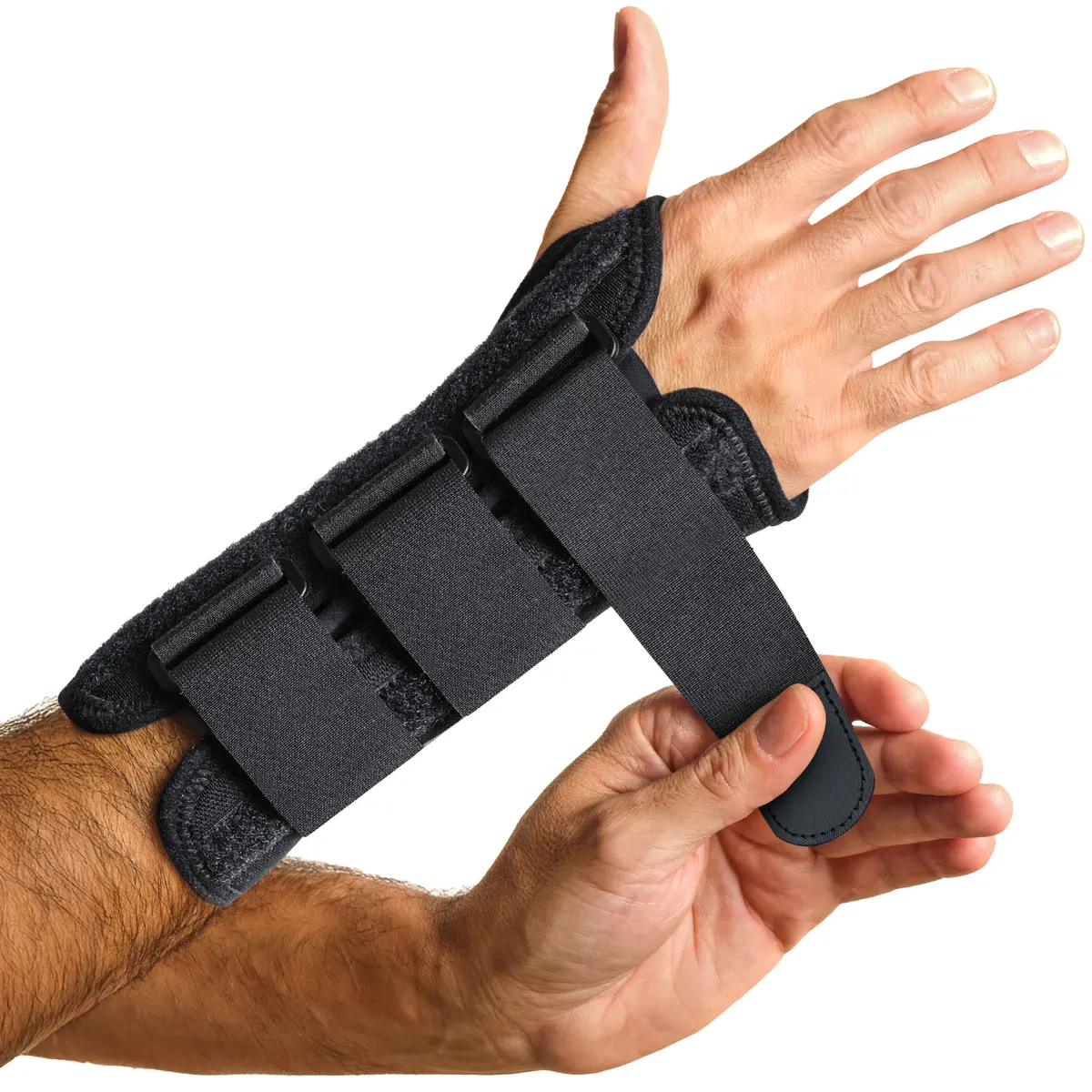
The purpose of a carpal tunnel brace is simple: hold the wrist in a neutral, slightly extended position so the carpal tunnel stays as open as possible. This is the position where the nerve has the most room and the least pressure.
A good brace should have a rigid or semi-rigid internal splint — typically aluminum or plastic — that prevents flexion and extension without immobilizing the fingers. You should still be able to move your fingers freely.
Night vs. Day Bracing
Nighttime Bracing
This is the most important time to wear a brace. Your wrist flexes unconsciously during sleep, compressing the nerve at its most vulnerable. Consistent nighttime use is the foundation of bracing therapy for carpal tunnel.
Daytime Bracing
Helpful during specific activities that aggravate symptoms — repetitive gripping, typing, or using vibrating tools. Avoid wearing a brace all day long, as it can weaken the muscles around your wrist and create dependence.
How to Wear a Brace Correctly (Step by Step)
- 1Slide your hand into the brace so the rigid splint runs along the palm side of your forearm and wrist.
- 2Position the brace so the splint keeps your wrist straight — not angled up, down, or sideways. Your wrist should feel neutral, as if resting on a flat surface.
- 3Fasten the straps starting from the one closest to your elbow, working toward your hand. Each strap should be snug but not tight.
- 4Check that you can freely wiggle all five fingers. If any finger feels stiff, numb, or tingly from the brace, loosen the straps.
- 5Wear consistently every night for at least 4–6 weeks before evaluating whether it's helping.
Common Mistakes to Avoid
Wearing it too tight
A brace that's too tight can cut off circulation, causing more numbness — not less. You should be able to slide a finger between the brace and your skin.
Wrong wrist position
If the brace holds your wrist in flexion or extension instead of neutral, it can actually worsen carpal tunnel symptoms. The splint should keep your wrist straight.
All-day overuse
Wearing a rigid brace 24/7 can lead to wrist stiffness and muscle weakening over time. Use it at night and selectively during the day for specific activities.
Ignoring worsening symptoms
A brace is one part of symptom management. If your symptoms are getting worse despite bracing, you should see a hand specialist for further evaluation.

My Recommendation
With fellowship training in hand and upper extremity surgery
After evaluating and treating many patients with carpal tunnel syndrome, I designed the OrthoMD Wrist Brace to address the most common issues I see with over-the-counter splints: poor wrist positioning, uncomfortable materials, and one-size-fits-all designs that don't actually hold the wrist in neutral.
The OrthoMD Wrist Brace features a contoured aluminum splint that maintains a true neutral wrist position, breathable fabric for comfortable overnight wear, and three adjustable straps for a secure fit without excessive compression. It's lightweight enough to wear to sleep without disrupting rest, and low-profile enough to fit under a sleeve during the day when needed.
This brace is appropriate for patients with mild to moderate carpal tunnel symptoms who are starting conservative treatment. It is not a substitute for professional medical evaluation — if your symptoms are severe, worsening, or not improving with bracing, please schedule an appointment.
When You Should See a Hand Specialist
Bracing is often a good first step, but it's not a replacement for professional evaluation. You should see a hand specialist if:
Early evaluation can help address nerve compression before damage progresses. Learn more about carpal tunnel syndrome or contact our office to schedule a same-day evaluation.